
Calgary Pickleball Club (CPC) Ratings Policy
Ratings Policy for 2026
Purpose and Scope
This policy governs player ratings for all Calgary Pickleball Club (CPC) members — new and existing. It ensures consistent, transparent, and equitable placement of players in programs, leagues, and tournaments organized or sanctioned by the Club.
Rating Standards
Primary Rating System
CPC recognizes the Dynamic Universal Pickleball Rating (DUPR) as its official rating standard.
Minimum DUPR Criteria
To be recognized for placement purposes, a DUPR rating must include at least 25 recorded games.
Certified Coach Evaluations
Players without a valid DUPR rating may obtain a CPC rating through an official skill evaluation conducted by an IPTPA Level 2 Certified Coach or a Certified Ratings Specialist or an NCCP accredited coach with a DUPR rating .3 higher then the level sought. Ie a player looking for a 3.5 rating, could be evaluated by an NCCP Level 2 coach with a 3.8 DUPR rating or higher. Evaluations must clearly indicate the assessed level (e.g., 3.0, 3.5, 3.7, 4.0). CPC reserves the right to verify evaluator credentials and decline ratings that do not meet internal standards. The assessor must utilize a ratings chart clearly assessing all aspects of a player’s skill set.
CPC also offers club-run rating sessions to provide members with a clear and accessible pathway to obtain an initial rating. Details on upcoming rating sessions—including dates, locations, and registration information—will be announced through club communications.
External Ratings (Other Clubs or Organizations)
CPC may, at its discretion, accept ratings from other clubs or organizations registered with Pickleball Canada. Currently accepted ratings providers include:
The Club 315 – Vair rating
The Calgary Pickleball Center
The Cochrane Pickleball Club
Mega Courts Pickleball
Additional stipulations:
If a rating is expressed as a range (e.g., 3.5–4.0), the lower number will be recorded (e.g., 3.5).
All external ratings will be reviewed on a case-by-case basis, and CPC reserves the right to reject any rating that:
Is inconsistent with this policy,
Cannot be verified, or
Is not aligned with CPC’s placement standards or integrity guidelines.
Rating Pathways
Players may obtain or update their CPC rating through one of the following three approved pathways.
DUPR Rating Pathway
| CPC Rating Level | Required DUPR Range |
|---|---|
| 3.0 | 3.0 – 3.499 |
| 3.5 | 3.5 – 3.699 |
| 3.7 | 3.7 – 3.999 |
| 4.0+ | 4.0 and above |
Certified Coach Evaluation Pathway
Players without a valid DUPR rating may obtain a CPC rating through an official skill evaluation conducted by an IPTPA Level 2 Certified Coach or a Certified Ratings Specialist. Evaluations must clearly indicate the assessed level (e.g., 3.0, 3.5, 3.7, 4.0). CPC reserves the right to verify evaluator credentials and decline ratings that do not meet internal standards.
Tournament Performance Pathway
Players may qualify for a CPC rating based on performance in sanctioned tournament play, provided all the following conditions are met:
The player has participated in a minimum of five (5) sanctioned tournaments at a single, clearly defined level.
The player has earned medals in at least two (2) of those tournaments (gold, silver, or bronze).
The tournaments must have clearly defined numeric skill levels (e.g., 3.0, 3.5, 4.0).
Tournaments using arbitrary divisions such as “Beginner,” “Intermediate,” or “Advanced” will not be accepted under this pathway.
Only tournaments played within the past three (3) years will be considered.
All results must be verifiable through recognized tournament result databases such as:
Pickleball Brackets
PickleballTournaments.com
Players meeting these criteria will be assigned a CPC rating matching the level competed at (e.g., a player who competes in 3.5–3.99 events and medals twice will be rated 3.5).
Ongoing Ratings Management
Monthly Updates
CPC ratings are synchronized with DUPR and our club management software. To enable updates, members must join the official Calgary Pickleball Club DUPR Club.
Adjustment Policy
If a member’s DUPR rating increases, the updated rating will be reflected automatically.
Verification and Oversight
CPC reserves the right to audit, verify, or require re-evaluation at any time if discrepancies, data inconsistencies, or disputes arise.
Discretionary Authority
The Calgary Pickleball Club reserves full discretion to interpret and apply this policy, require re-evaluations when warranted, and make exceptions in exceptional circumstances, provided they support fair play, safety, and competitive balance.
Date: June 2026
This document supersedes all previous versions of the CPC Ratings Policy.
Please email proof of rating for the 2026 season following our guidelines. Note! all unverified players will be set at 2.5 skill level unless verified by CPC in 2026. Also, please connect your DUPR account to the Calgary Pickleball Club.
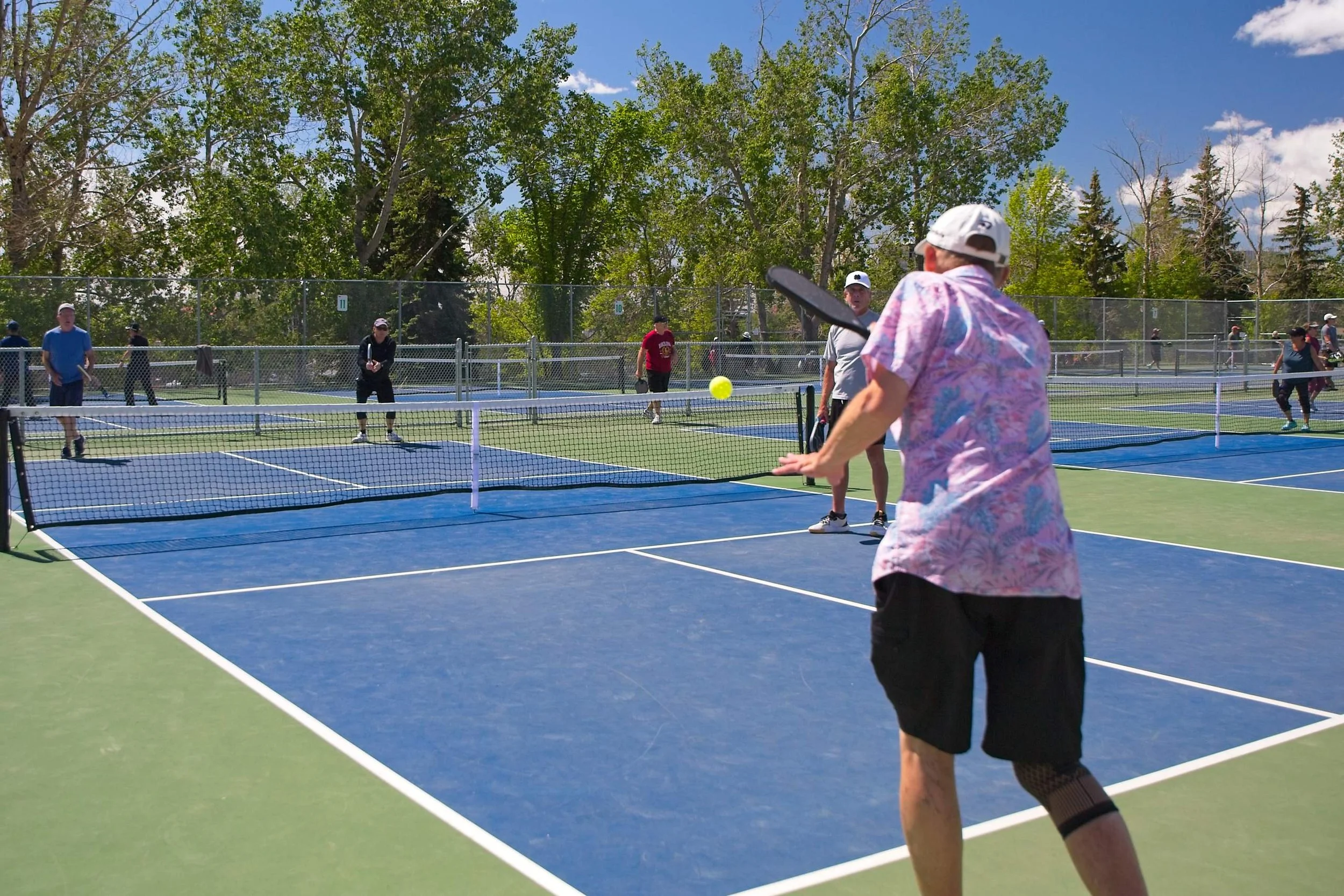
Skills test:
For every skill you should have a complete understanding of the rules of pickleball and be able to demonstrate a level of consistency in each of the strokes appropriate to the level being challenged. Players should understand and demonstrate good hand/eye co-ordination and correct footwork when moving around the court.
2.5 level:
Dinks – 6/10 forehand and backhand down the line, forehand and backhand cross court
Resets – 4/10 – play a drop shot from the middle of the court to land in the no-volley zone (kitchen)
Volleys – 5/10 – Forehand and backhand punch volley (punch volleys should land in the back half of the court)
Overheads – 2/5
Serves 3/5 – From both right and left sides of the court. (serves should land in back half of court)
Serve returns – 3/5 – From both right and left sides of the court. (returns should land in back half of court)
During the games players should demonstrate that they understand the scoring and basic positioning around the court during rallies.
3.0 level:
Dinks – 7/10 forehand and backhand down the line, forehand and backhand cross court
Resets – 5/10: – play a drop shot from the middle of the court to land in the no-volley zone (kitchen)
Drop shots (played from baseline) – 2/5 – play a drop shot from the middle of the court to land in the no-volley zone (kitchen)
Volleys – 6/10 – Forehand and backhand volleys demonstrating 10 each of a punch volley landing in back half of court and a block volley to land in the no volley zone or up to one foot beyond the no volley line.
Overheads – 3/5
Serves 3/5 – From both right and left sides of the court. (serves should land in back half of court)
Serve returns – 3/5 – From both right and left sides of the court. (returns should land in back half of court)
Offensive lobs – 3/5 – Lobs played from the no volley zone line.
During the games players should demonstrate that they can keep the ball in play during short rallies, have good mobility and speed around the court, does not back away from the NVZ unnecessarily, and moves together with partner as a team
3.5 level:
Dinks – 16/20 windshield wiper dinks (dinking while moving laterally across the court)
Resets – 8/10 – resets (drop shots) shot from the middle of the court to land in the no-volley zone (kitchen) in each of – forehand down the line, forehand cross court, backhand down the line, backhand cross court
Drop shots (played from baseline) – 3/5 – drop shots from the middle of the court to land in the no-volley zone (kitchen) forehand down the line and backhand down the line
Volleys – 7/10 – Forehand and backhand volleys demonstrating 10 each of a punch volley landing in back third of court. 3/5 block volleys forehand and backhand to land in NVZ
Overheads – 3/5
Serves 4/5 – From both right and left sides of the court. (serves should land in back third of court)
Serve returns – 4/5 – From both right and left sides of the court. (returns should land in back third of court)
Offensive lobs – 3/5 Lobs played from the no volley zone line.
During the games players should demonstrate that they can dink while changing the ball direction from cross-court to down the line and dinks with purpose, can sustain a volley exchange, moves with partner as a team. The team should be demonstrating a level of communication to utilize strategy and identify opponent weaknesses.
4.0 level:
The difference between a 3.5 and a 4.0 pickleball player is that a 4.0 has improved consistency, control of shots, and strategic ability. They more consistently land serves, returns, dinks, etc. with control of pace and placement. They’re also acutely aware of an opponent’s strengths and weaknesses
Dinks – 16/20 windshield wiper dinks (dinking while moving laterally across the court)
Resets – 4/5 – resets (drop shots) shot from the middle of the court to land in the no-volley zone (kitchen) in each of – forehand down the line, forehand cross court, backhand down the line, backhand cross court. Shots must land in a target zone consisting 1/4 the width of the kitchen
Drop shots (played from baseline) – 7/10 – drop shots from the middle of the court to land in the no-volley zone (kitchen) forehand down the line and backhand down the line. Shots must land in a target zone consisting 1/4 the width of the kitchen
Volleys – 4/5 – Forehand and backhand volleys demonstrating 5 each of a punch volley landing in back half of court (5 down the line an 5 cross court) and a 3/5 block volley to land in the no volley zone or up to one foot beyond the no volley line.
Overheads – 4/5
Serves 4/5 – From both right and left sides of the court. (serves should land in back half of court)
Serve returns – 4/5 – From both right and left sides of the court. (returns should land in back half of court)
Offensive lobs – 4/5 Lobs played from the no volley zone line.
During the games players should demonstrate that they can dink while changing the ball direction from cross-court to down the line and dinks with purpose, can sustain a volley exchange, moves with partner as a team. The team should be demonstrating a level of communication to utilize strategy and identify opponent weaknesses.